Pricing & Availability Management for Operators
Company: Getmyboat (marketplace for boat rentals with 150K listings in 184 countries)
Role: Lead Product Designer (led research, defined the pricing model, and designed the end-to-end calendar-based pricing system)
Team: 5 frontend engineers, 2 backend engineers, 1 Product Manager
Timeline: 7 months (2025-2026)
Result: The redesigns of the app led to the App store rating going from 3.6 → 4.9 in 2 years.
A Pricing Model That Did Not Reflect Real-World Operations
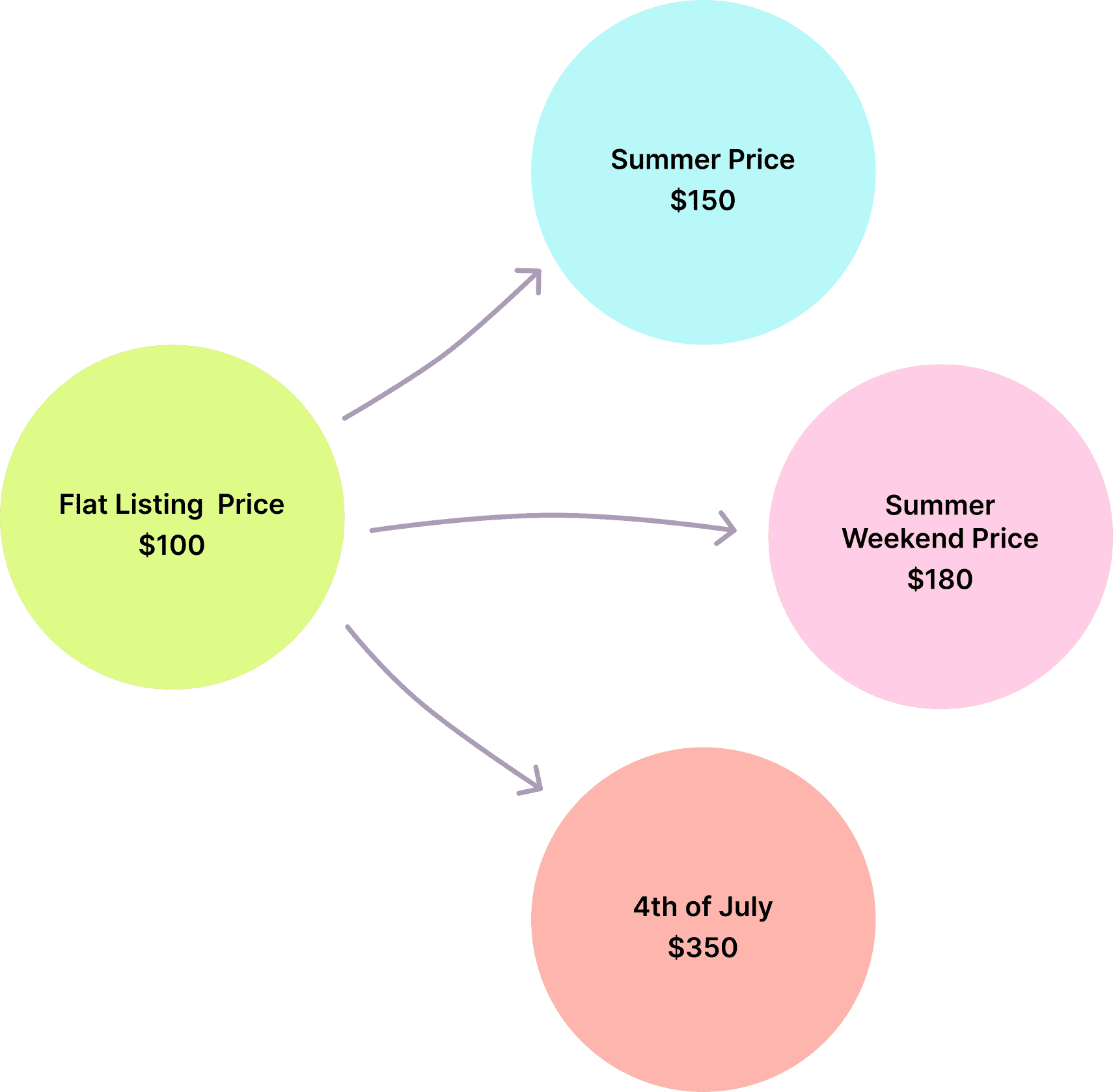
The previous pricing system relied on flat listing prices, which did not reflect how boat rental businesses operate.
Demand in this industry fluctuates significantly throughout the year. In many locations, operators rely on a small number of high-demand weekends to generate most of their yearly income.
Because the platform supported only a single price per listing:
Owners could not represent their actual pricing structure.
Renters often saw one price on the listing but received a different offer from the owner.
This created confusion and reduced trust in the platform.
Internal signals confirmed the scale of the issue:
~50% of booking offers were abandoned
~60% of renter complaints were related to pricing confusion
This indicated that the existing pricing system was limiting both owner adoption and renter conversion.
Understanding How Boat Operators Structure Pricing
The limitations of the flat pricing model were already well known within the team. However, before redesigning the system we needed a deeper understanding of how boat operators actually structure their pricing and availability throughout the year.
I led the research phase to investigate:
how owners think about pricing and demand
how they structure seasonal price changes
which pricing scenarios are most important for GetMyBoat’s marketplace
The research included:
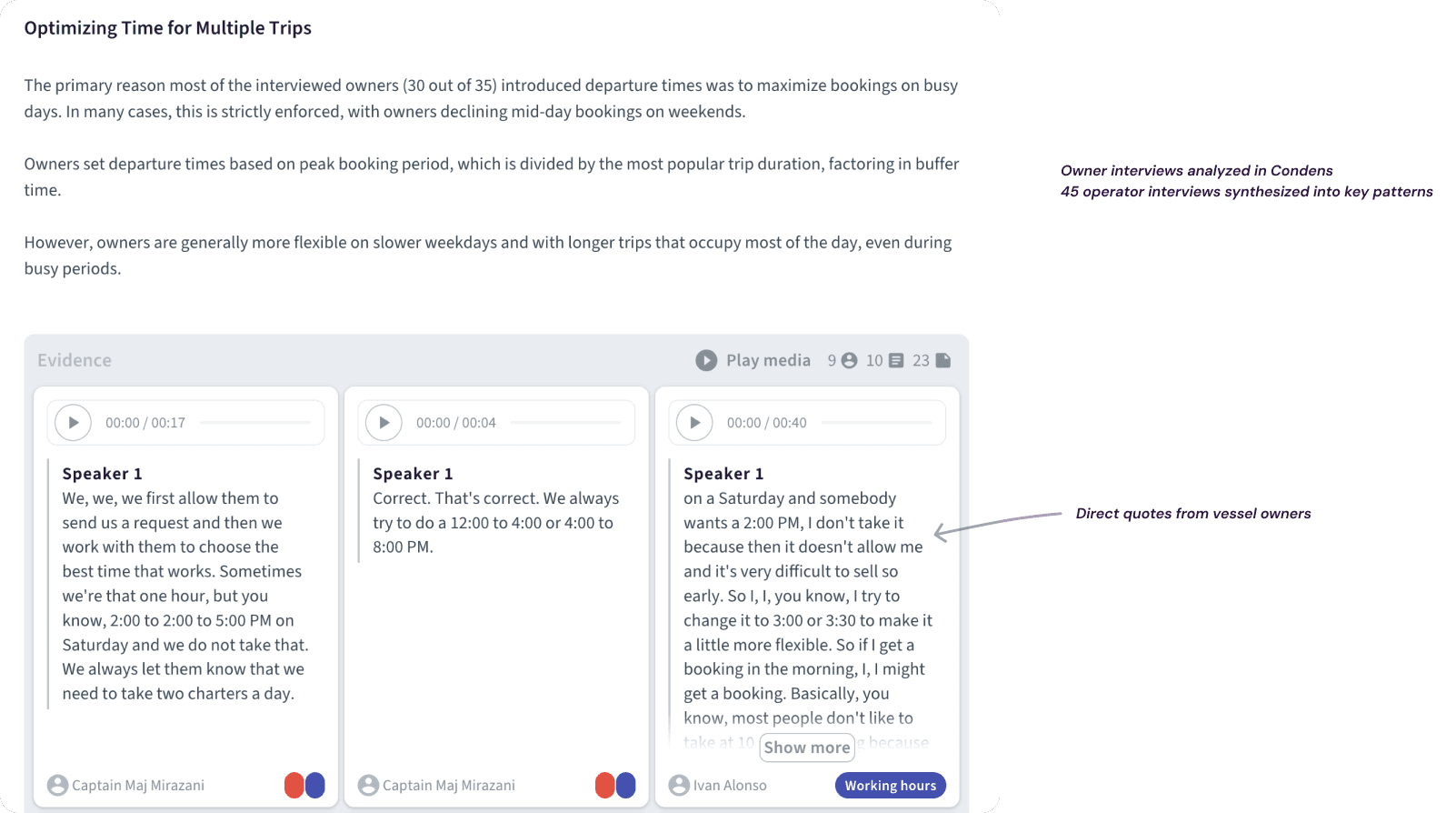
interviews with vessel owners
analysis of owner pricing data collected by sales team
Key insights
Owners structure pricing and availability around seasonal demand. Having a limited amount of peak demand days owners increased pricing and introduced stricter availability rules.
During slower days and seasons owners provided more flexibility in pricing and availability.
Pricing and availability were closely connected in owner workflows
High value owners had variations of seasonal, weekend and/or holiday pricing.
These findings helped define the requirements for a pricing system that could support business needs of the boat owners.
Designing a System That Balances Pricing Flexibility With Clarity
The core challenge was enabling owners to define complex seasonal pricing without creating a configuration system that would be difficult to understand or maintain.
Boat operators frequently vary prices based on:
seasonality
weekday vs weekend demand
special events
At the same time, owners still needed to quickly answer a simple question:
“How much will the renter pay on this particular date?”
Another long-term objective was enabling instant booking, which requires accurate pricing and availability without manual negotiation.
This meant the new system needed to support complex pricing logic while remaining easy to review and edit.

At the same time, owners still needed to quickly answer a simple question:
“How much will the renter pay on this particular date?”
Another long-term objective was enabling instant booking, which requires accurate pricing and availability without manual negotiation.
This meant the new system needed to support complex pricing logic while remaining easy to review and edit.
Key UX Decisions That Shaped the System
Connecting Pricing and Availability Through Seasons
In early iterations we attempted to keep pricing settings and availability settings separate. However, testing these concepts quickly revealed that the separation made the system harder to understand.
Owners often think about pricing and availability together when planning their operations, especially during high-demand periods.
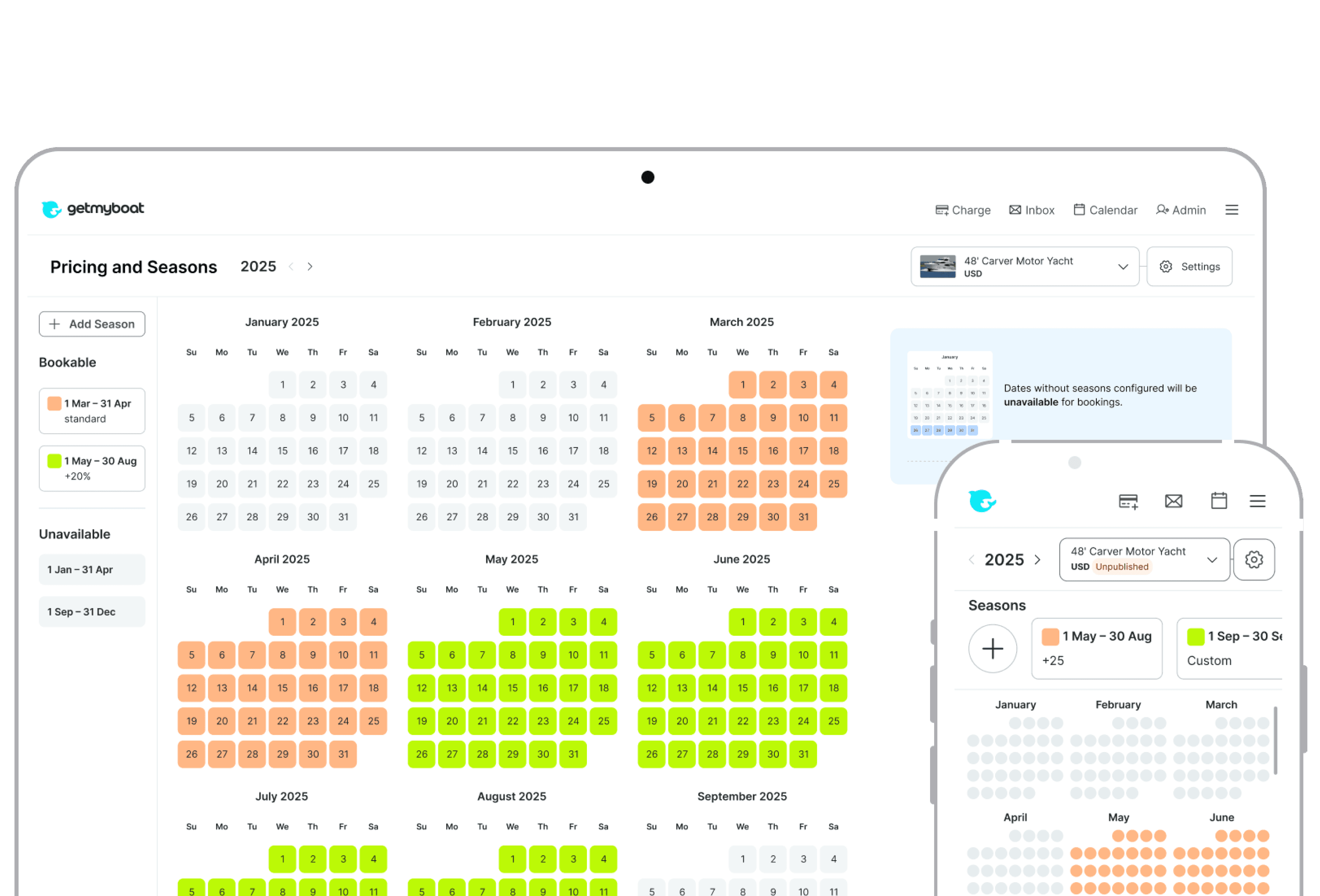
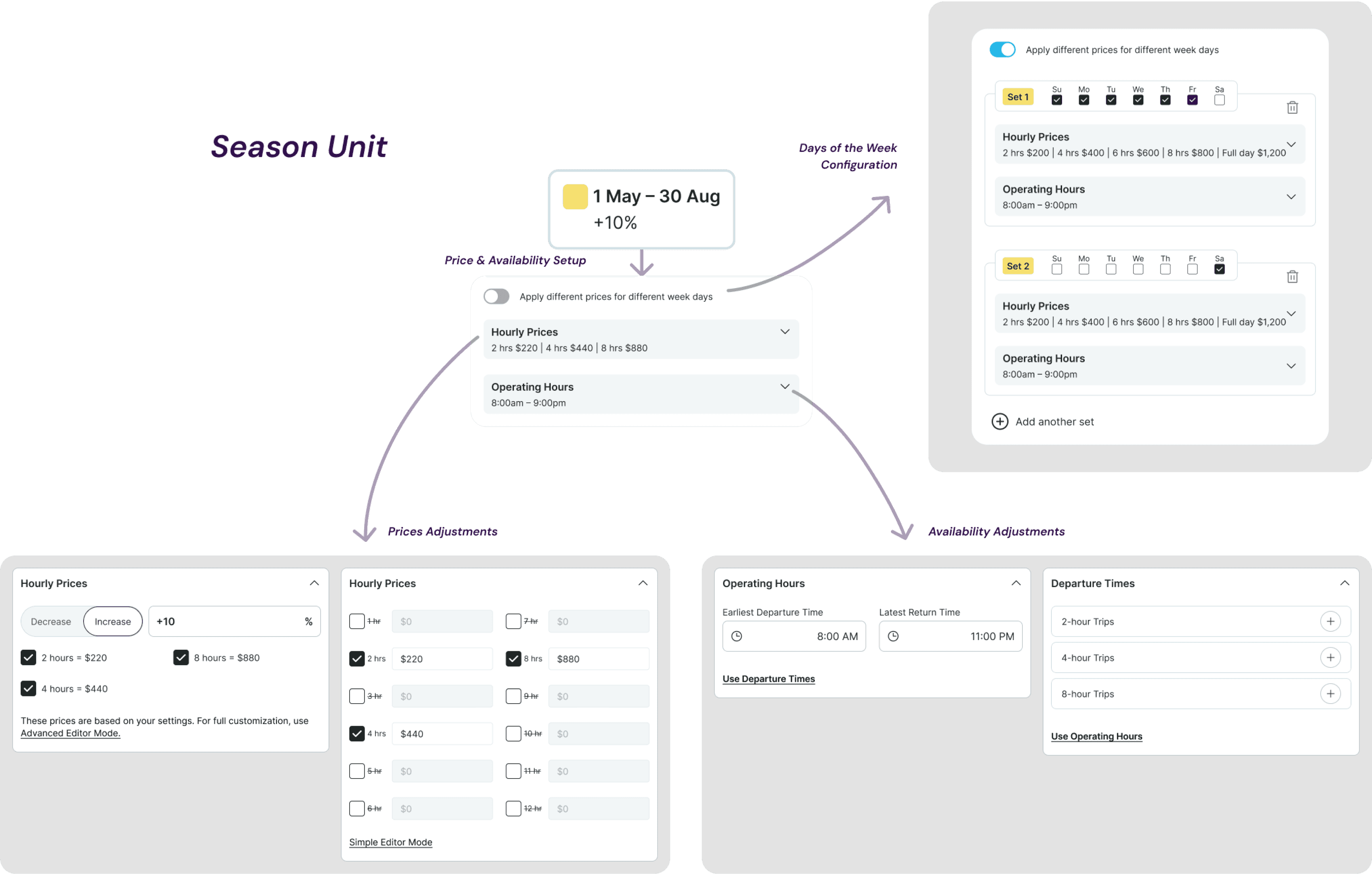
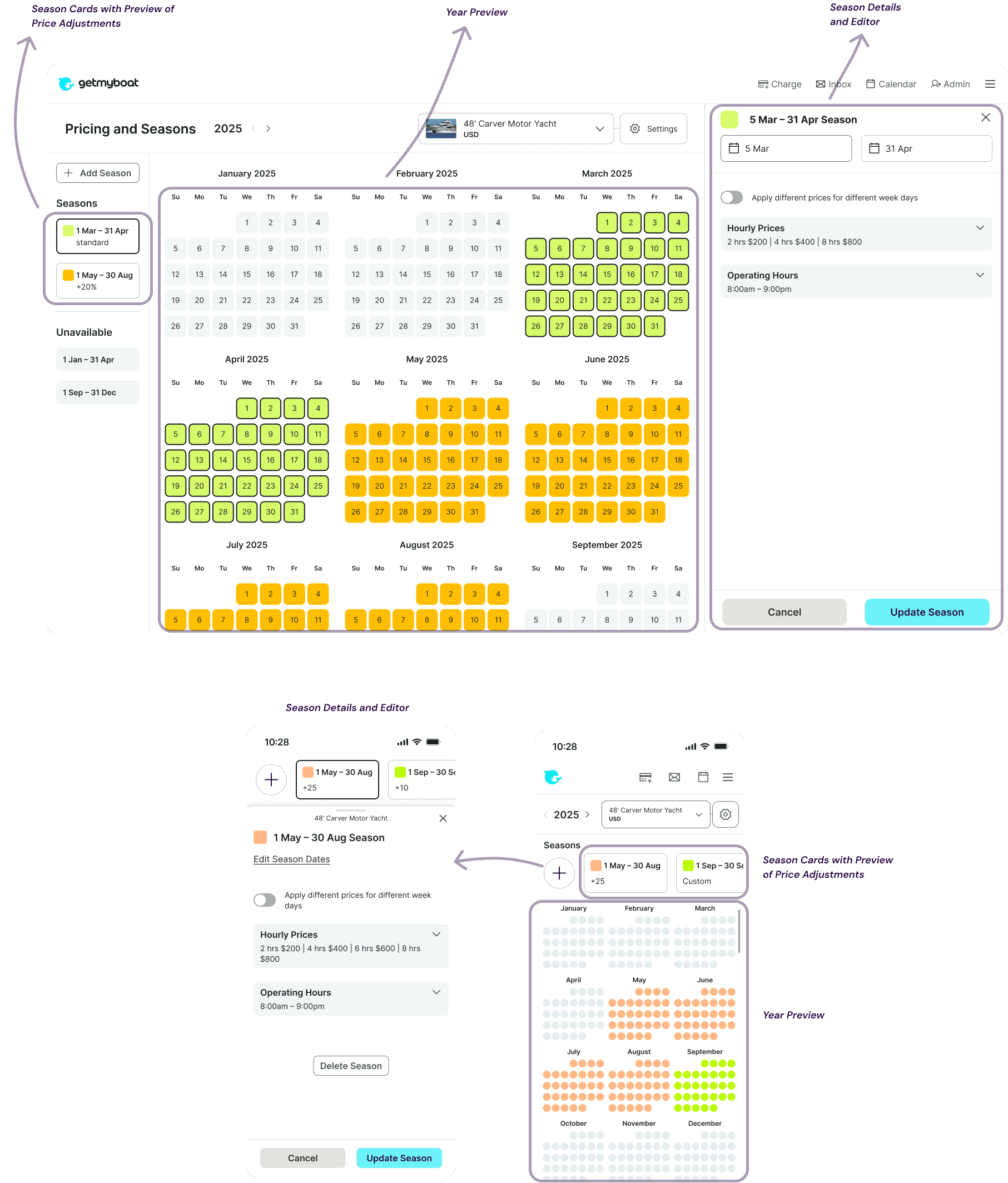
To support this workflow, we introduced the concept of a season — a unit that combines both price adjustments and availability rules within a defined time period. This allowed owners to fully customize offers for high-demand periods while keeping the configuration structure clear.
A Calendar-Based Model for Pricing and Availability
Pricing and availability were consolidated into a single calendar interface, replacing fragmented configuration screens.
This allowed owners to see how prices change across the year and made the pricing structure easier to review.
Introducing Base Settings for Faster Price Updates
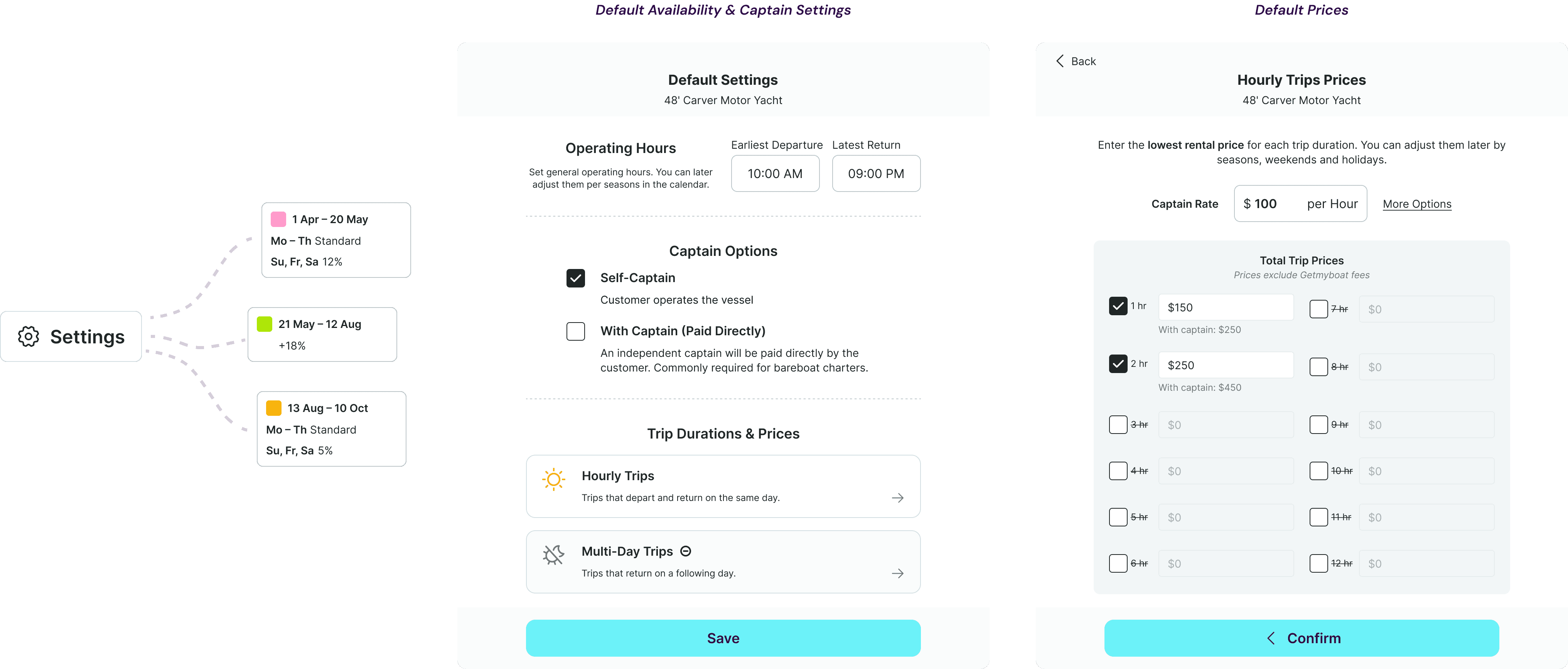
To simplify ongoing management of pricing, we introduced base settings where owners can define their default price and availability.
These settings act as a foundation for the system, while seasons apply adjustments on top of them.
This structure allows owners to quickly update base prices (for example when fuel costs change) and have those changes automatically propagate across different seasonal periods.
Reworking the Flow Mid-Project to Reduce Interaction Complexity
During development, the team identified concerns about the complexity of the original wizard-based configuration.
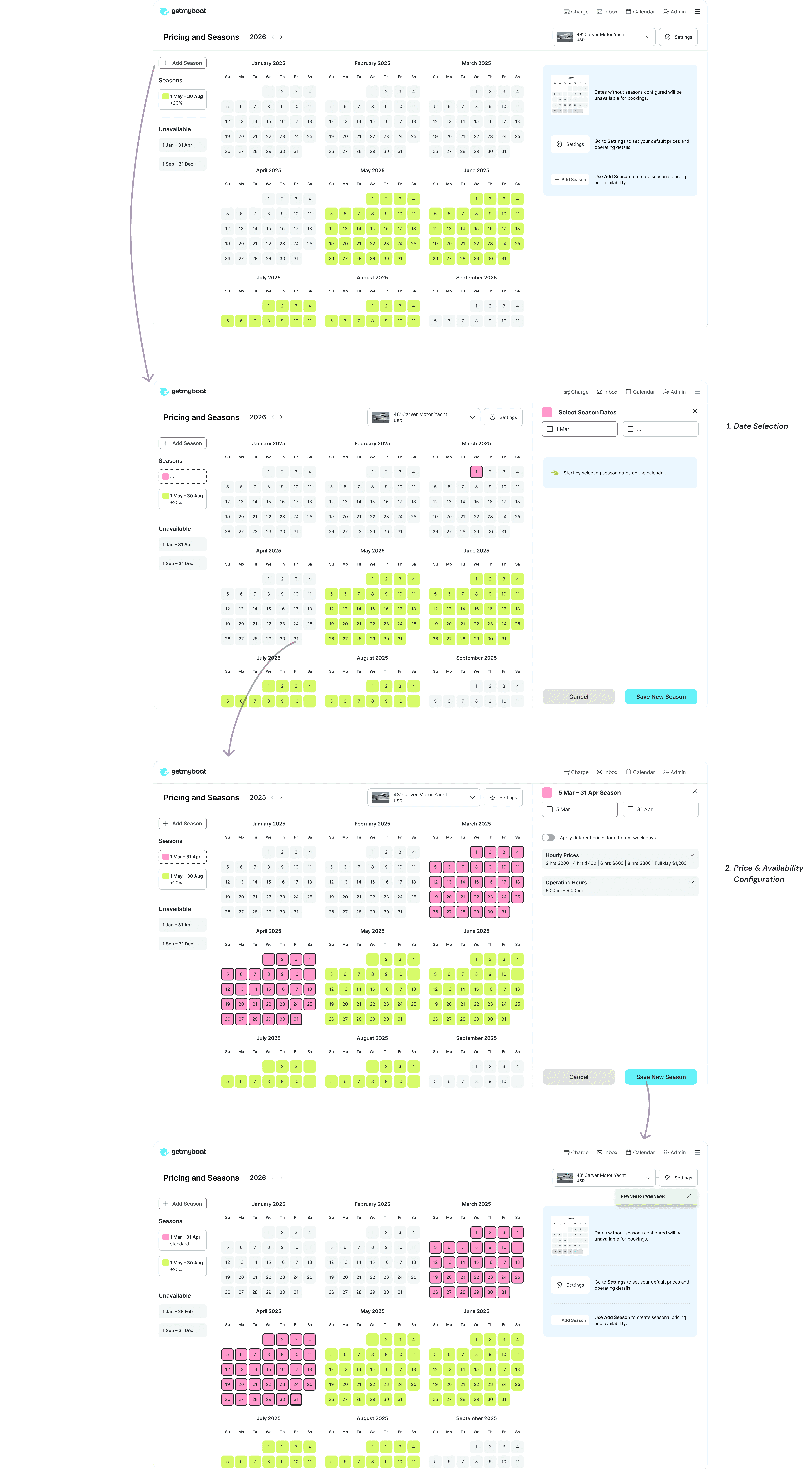
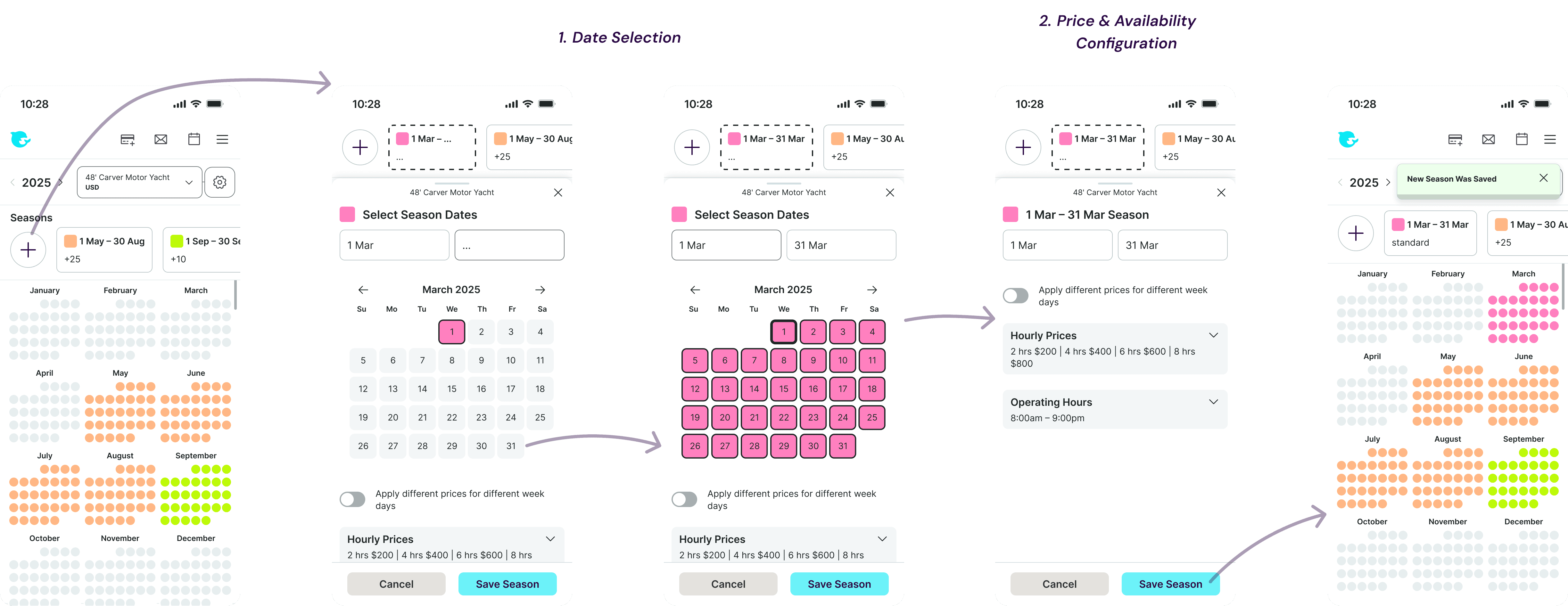
I proposed a redesigned interaction model that simplified the flow and integrated configuration directly into the calendar workflow.
Initially, the team was cautious about making a structural change at that stage of the project. After addressing technical concerns and discussing the revised approach with the engineering lead, the team agreed to adopt the simplified version.
The redesign reduced interaction steps while preserving flexibility for different business models.
Validating the System With Boat Operators
We conducted usability testing with vessel owners to evaluate the new pricing system.
Participants were asked to:
create seasons
configure pricing
review how renters would see prices
The testing showed strong positive reception from owners, particularly regarding:
the ability to define seasonal pricing
the clarity of the calendar overview
improved understanding of how pricing changes across the year
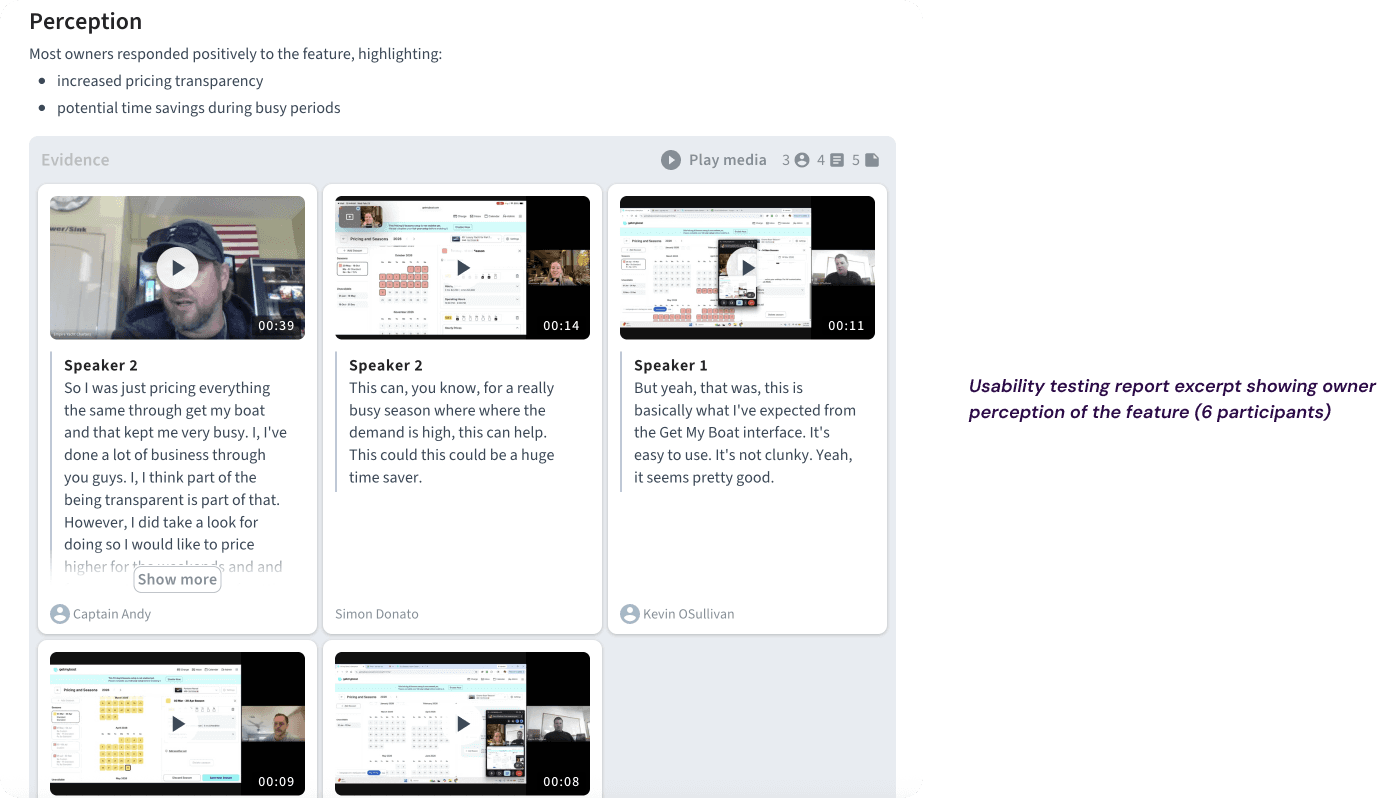
The sessions also revealed several opportunities to further refine the interaction design, including areas where labeling, editing flows, and feedback states could be improved to make the configuration process clearer and faster for owners.
Release and Impact
The Prices & Seasons system was released gradually to owners after implementation. Adoption was strong, with the majority of active owners transitioning to the new pricing configuration within a short period after launch. The new system allowed operators to represent their pricing structure more accurately, particularly during high-demand periods.
Following the release, we observed reduction in negative renter sentiment related to listing pricing. The improved pricing transparency is projected to to increase offer-to-booking conversion by ~10%.
Beyond these immediate improvements, the new pricing system unlocked an important strategic opportunity for the product team. With more reliable pricing and availability data, the team is able to begin testing instant booking in multiple locations. These experiments allowed us to explore different operational models and identify the most effective approaches for improving booking conversion.
The Prices & Seasons system established a scalable foundation for managing seasonal pricing across the marketplace and enabled further experimentation aimed at improving the overall booking experience for both owners and renters.
Copyright © 2026
Anastasia Zolotova
Contact:
zoloto.anastasia[at]gmail.com